Students Complete New 7-Week SCO Training

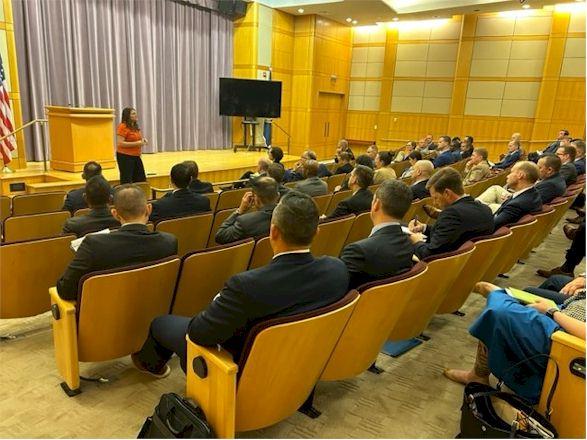
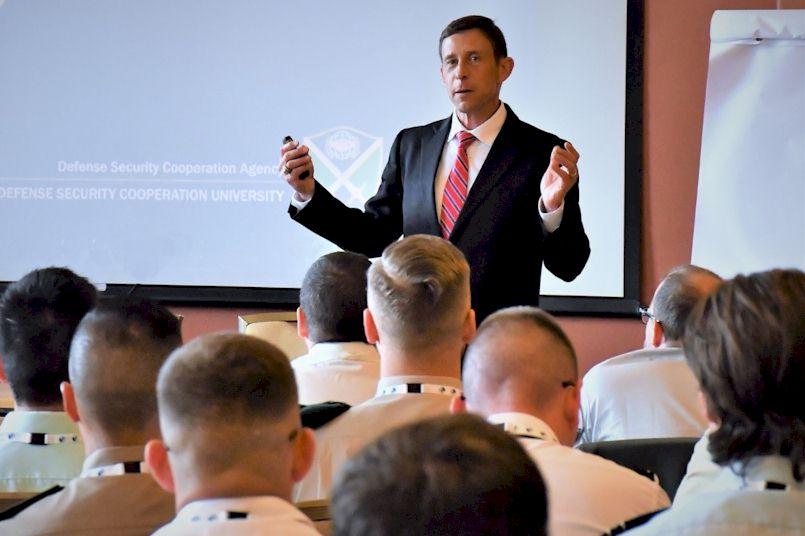
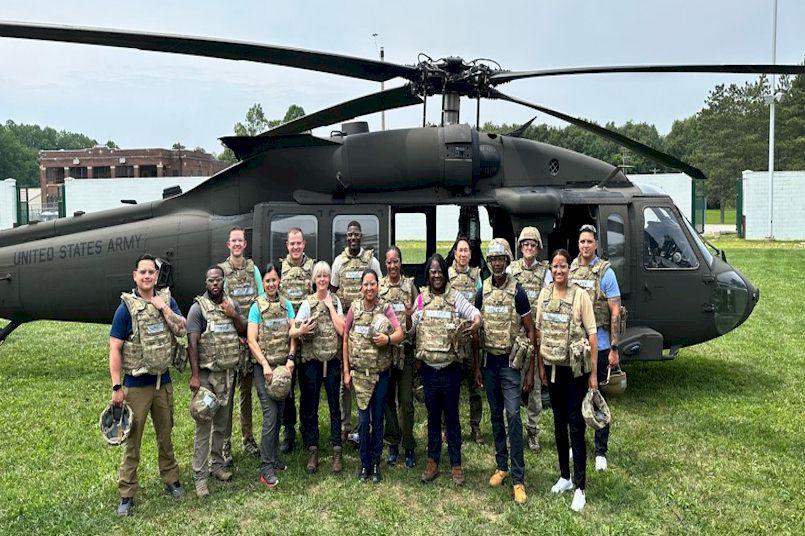
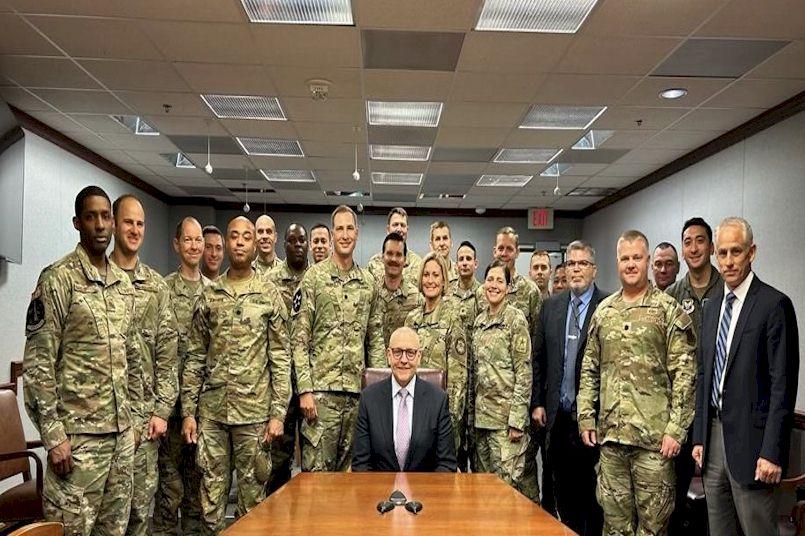
On April 19, 2023, Security Cooperation Organization (SCO) personnel completed Defense Security Cooperation University''s (DSCU) seven-week combined training program, which currently requires students to successfully navigate both SCO-220 Fundamentals and Application of SCO Operations and SCO-262 Briefings and Consultations. The group of students consisted of military officers, non-commissioned officers, and civilians assigned to SCOs across the globe.

To provide the comprehensive training needed for SCO personnel to have the foundational knowledge necessary for these complex, interagency, and international assignments, DSCU recently overhauled its SCO training, transitioning away from a 21-day virtual course in favor of an in-resident program spanning seven weeks. DSCU's modernization of the SCO training program represents the first in a series of planned efforts to improve SCO management and training to better prepare SCOs for their demanding assignments.

During the training program, students glean knowledge from lectures, group work, and practical exercises while hearing from dozens of guest speakers and experts including senior military and policy leaders, ambassadors, academics, and Security Cooperation practitioners. The most recent SCO-220 and SCO-262 class met with a wide array of experts including former DSCA Director, Lt. Gen. (R) Charles Hooper; Deputy Assistant Secretary for Regional Security, Bureau of Political-Military Affairs at the Department of State, Ms. Mira Resnik; Deputy Assistant Secretary of the Army for Defense Exports and Cooperation (DASA (DE&C)), Mr. Patrick Mason; the U.S. Army Security Assistance (USASAC) Command Team, Brig. Gen. Jason "Brad" Nicholson and Command Sgt. Maj. Stephen Burnley; Deputy Assistant Secretary of the Navy (International Programs) and head of the Navy International Programs Office (NIPO), Rear Adm. Anthony Rossi and many other distinguished officials.
Post Date
On
On
Off
Group photo

Future Advisors Complete Defense Advisor Course

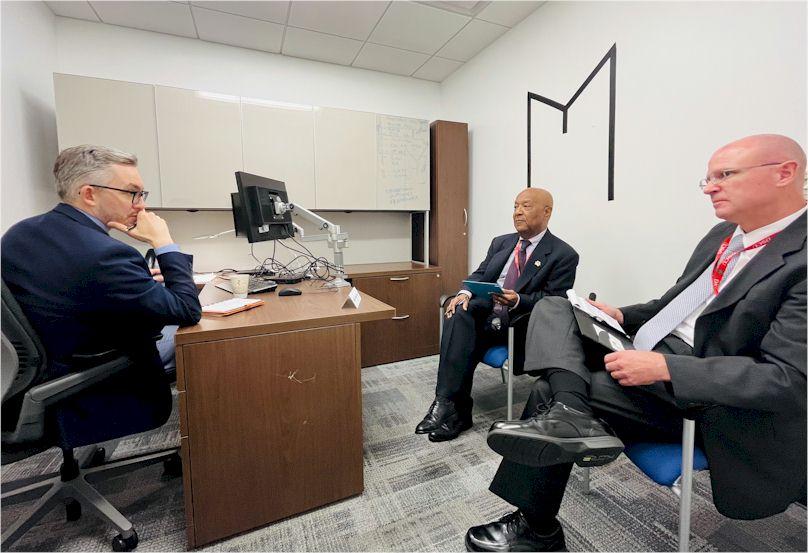
Senior U.S. Government Security Cooperation personnel attended Defense Advising-205, Intermediate Strategic Advising, for two weeks during May 2023, in the National Capital Region. This course provided future Advisors with knowledge and tools that enable them to rapidly understand the worldwide context in which they operate, identify and adapt to the challenges they face, and build productive relationships that lead to sustainable and local solutions with international partners.

Defense Security Cooperation University’s (DSCU) College of Strategic Security Cooperation (CSSC) houses Defense Advising. Defense Advising introduces and refines students’ foundational concepts, techniques, and approaches for building relationships and Partner Nation capacity in U.S., bilateral, or multilateral missions.

The DA-205 course concentrated on Advising Fundamentals. Advising Fundamentals provides tools and skills to build relationships and engage in sustainable Capacity Building. The DA-205 course was structured around three activities: learning, reflection, and practice through role-playing scenarios.

Since its establishment in July 2010, Defense Advising has trained more than 1,000 advisors who have deployed in support of global operational and Security Cooperation missions. Throughout its history, the advisor training program has evolved and adapted to support ever changing requirements.

Post Date
On
On
Off
Group photo

SSCS Mobile Training Team Engages with Finland

A School of Security Cooperation Studies (SSCS) mobile training team (MTT) recently traveled to Finland to conduct the International Partner Security Cooperation Logistics and Finance course. The course curriculum spans the full spectrum of Security Cooperation, including legislation & policy, technology transfer/end-use monitoring, foreign military sales, acquisition, logistics, and financial management.

The students included members of the Finnish Ministry of Defence actively managing the Government's F-18 and F-35 programs. The engagement included dialogues with the Deputy Chief of Finnish Defence Forces Logistics Command and his staff.

SSCS is the provider of choice for training our partners and allies on Security Cooperation and associated processes. These seminars/trainings provided by MTTs typically involve up to eighty (80) hours of training plus time for administrative functions and are usually completed over the course of 10 business days.

Founded in 1976, as the Defense Institute of Security Assistance Management (DISAM), DSCU’s SSCS educates American and international officials about Security Cooperation. SSCS faculty are both civilian and military specialists from across the joint force, who are recognized experts in their field.

Post Date
On
On
Off
SSCS logo

May DSCU Scholars' Publications

Kudos to three Defense Security Cooperation University Office of the President colleagues, Dr. Jason Fritz, Mr. Michael Skaggs and Dr. Thomas-Durrell Young, for their recently published academic works.

Dr. Fritz, the DSCU Chief Academic Officer, and his co-author David Malet published “Historical Responses to Foreign Fighters and Returnees” in the book, Returning Foreign Fighters: Responses, Legal Challenges and Ways Forward, edited by Francesca Capone, Christophe Paulussen, and Rebecca Mignot-Mahdavi a T.M.C. Asser Press published here.

Mr. Skaggs, the Defense Security Cooperation University Senior Lecturer for Strategy and Policy, whose chapter, “The Military Attaché: Adapting to Foreign Cultures,” was recently published in the book Boots and Suits: Historical Cases and Contemporary Lessons in Military Diplomacy, a Marine Corps University Press publication. The full book can be found here.

Dr. Young, the DSCU Senior Academic Analyst, whose article, “Reinforcing NATO’s Eastern Airspace: The Institutional Challenges of Transitioning from Soviet/Russian Fighters to Western Multi-Role Fighter Aircraft,” was recently published in the Royal United Services Institute (RUSI) Journal, a Routledge publication. The article can be found here.

The views and opinions presented herein are those of the author and do not necessarily represent the views of DSCA/DSCU or its organizations. The appearance of external hyperlinks does not constitute DSCA/DSCU endorsement of the linked websites, or the information, products or services therein.

Post Date
On
On
Off
DSCU logo

Students Conclude SCO Operational Engagements Course

From June 12-14, 2023, fifty-two Security Cooperation Organization (SCO) students attended the Defense Security Cooperation University’s (DSCU) SCO Operational Engagements Course (Briefings and Consultations) in the National Capital Region. The course focuses on students building key relationships for their in-country SCO assignments, where they represent the Department of Defense to allies and partners on Security Cooperation and Assistance programs.

The Fundamentals and Application of SCO Operations Course and the SCO Operational Engagements Course (Briefings and Consultations) ensure SCO personnel receive the education and make the contacts needed to be that vital link between U.S. whole-of-government Security Cooperation efforts and Partner Nations. The two courses combine into a seven-week training program during which students glean knowledge from lectures, group work, and practical exercises while hearing from dozens of guest speakers and experts including senior military and policy leaders, ambassadors, academics, and Security Cooperation practitioners.

The first day in the NCR Dr. Celeste Gventer, DSCU President, welcomed the students and discussed future Security Cooperation initiatives, to include the forthcoming Defense Security Cooperation Service (DSCS). This was followed by discussions with students’ respective Defense Security Cooperation Agency (DSCA) Country Portfolio and Financial counterparts. Finally, the students met with country desk officers from the Deputy Assistant Secretary of the Army for Defense Exports and Cooperation (DASA DE&C).

The second day visit to the State Department students met with the Deputy Assistant Secretary for Regional Security, Deputy Assistant Secretary (DAS) Mira Resnick and members from the Bureau of Political Military Affairs to include the Office of Regional Security and Arms Transfers (RSAT) and the Office of Security Assistance (SA).

The final day, spent at the Pentagon and Navy Yard, consisted of meetings with Joint Staff members, desk officers from the Secretary of the Air Force International Affairs (SAF/IA), and the Navy International Programs Office (NIPO). During the NIPO visit, Rear Admiral Rossi, provided insights into his organization's priorities and ways for the SCO's to successfully engage with their foreign counterparts.

The growing importance of Security Cooperation as a tool of national security demonstrates the criticality of SCO personnel at U.S. embassies. DSCU works to ensure SCO personnel have the knowledge, skills, and abilities to develop and sustain key relationships, assist partners in determining how to address capability and capacity gaps, and translate partner requirements into actionable Security Cooperation initiatives.

Post Date
On
On
Off
Class in session

DSCU Participation in 2023 Interallied CIOR

From June 25-27, 2023, Mr. John Zavage, the Defense Security Cooperation University (DSCU) Security Cooperation Organization (SCO) Curriculum Lead, participated in the 2023 Interallied Confederation of Reserve Officers (CIOR) Summer Congress in Helsinki, Finland. During the CIOR Summer Congress’s Young Reserve Officers Workshop (YROW), Mr. Zavage taught a block of instruction on "Effective Intercultural Leadership," led a practical exercise on "Managing Intercultural Conflicts," and helped facilitate a practical exercise on "Negotiations."

As a directorate of the Defense Security Cooperation Agency (DSCA), DSCU fully embraces the motto “Security through Global Partnerships.” DSCU staff and faculty, like Mr. Zavage, are sought after subject matter experts and look for opportunities to uphold relationships and provide education, support, and relevant information to the Security Cooperation community.

DSCU works to ensure the best outcomes for the National Defense Strategy through the planning and execution of unique and tailored Security Cooperation activities and programs, including engagements like the CIOR, and subsequent YROW, with the NATO Security Cooperation community. Mr. Zavage had the opportunity to directly engage with the YROW's more than 70 NATO reserve officers, including representative from the United States, Canada, the United Kingdom, France, Germany, Denmark, Switzerland, Austria, Sweden, Estonia, and Finland.

The CIOR, which predates NATO by one year, is the world’s largest and oldest military reserve officer organization. According to the CIOR website, the organization is committed to advising and supporting “NATO on Reserve matters, promote Reserve Service and foster professional development of reserve officers."

The 2023 Summer Congress’s theme was “Credibility and Readiness” and featured a one-week program, which hosted approximately 600 reserve and non-commissioned officers representing 34 allied and Partnership for Peace nations. This year’s location in Helsinki was a fantastic opportunity to engage with Finland as the newest member to the NATO alliance.

Post Date
On
On
Off
DSCU’s Mr. John Zavage

Fifteen Students Complete Immersive Strategic Advisor Course

A Strategic Advisor Course recently concluded for fifteen students, including seven Defense Security Cooperation University (DSCU) Ministry of Defense Advisors who will deploy to worldwide assignments, at Muscatatuck Urban Training Center (MUTC), Camp Atterbury, Indiana. This three-week course led by DSCU’s College of Strategic Security Cooperation (CSSC) Defense Advising Department prepares DoD experts to serve safely and effectively as advisors in operational and steady-state capacity building missions worldwide.

The Strategic Advisor Course is delivered in an immersive, residential training environment. It also includes an active schedule meant to create a challenging environment that tests the students’ ability to deal with stress and high operational tempo while building and managing effective relationships.

As an institute of higher learning, DSCU holds itself accountable to a higher standard of Security Cooperation education and practice. One of the key modes of accountability is collecting student feedback through surveys and integrating this feedback into future course iterations.

All students in course, the 41st of its kind, confirmed the importance of the immersive, intensive environment. Including, one student stating, “I’m leaving this course with a lot more knowledge and ‘tools’ to put in my tool bag.” And another stating, “the opportunity to role play and put lessons into action” were the most valuable aspects of the course.

DSCU’s CSSC is focused on higher-level Security Cooperation education as well as functional and regional studies. The Defense Advising Department introduces and refines students’ foundational concepts, techniques, and approaches for building relationships and Partner Nation capacity in U.S., bilateral, or multilateral missions.

Since its establishment in July 2010, Defense Advising has trained more than 1,000 advisors who have deployed in support of global operational and Security Cooperation missions. Throughout its history, the advisor training program has evolved and adapted to support ever changing requirements.

Post Date
On
On
Off
Group photo

GWU and DSCU to Host 2023 Security Cooperation Conference

The Defense Security Cooperation University (DSCU) and The George Washington University (GWU) Elliott School of International Affairs will co-host the second annual Security Cooperation Conference, “Delivering on the Promise of Security Cooperation” October 12-13, 2023, in Washington, D.C. The Conference will examine the practice of Security Cooperation to inform U.S. policymakers, planners, and implementers responsible for advancing the National Defense Strategy (NDS) through global partnerships and international cooperation. This annual gathering of Security Cooperation scholars and practitioners fosters analysis, research, scholarship, and critical inquiry among participants.

“I look forward to the 2023 Conference during which we will explore the key issues facing our vast Security Cooperation enterprise,” said Dr. Celeste Gventer, DSCU President. “My main goal for the Conference is to build on the intersection of scholarship and practice in Security Cooperation; how one can inform the other. To accomplish this and deliver on the promise of Security Cooperation, we must foster partnerships, promote the exchange of knowledge, and collaborate across communities.”

This 1.5-day conference will feature plenary sessions to hear from leaders in the field and structured panel sessions around key issues that support examination of the practice of Security Cooperation. Panels will include topics, such as Political-Military Influence in Contested Environments, Working Collaboratively with Partners, and Ukraine Lessons for Crisis Security Cooperation. The topics explored during the 2022 SC Conference can be found in this Report.

The conference will observe the Chatham House Rule. Experts across the security cooperation and assistance enterprise and relevant research communities are invited to participate.

Limited seats are still available, visit www.2023-sc-conference.eventbrite.com to place your name in the queue. Signing up on the Event Brite page does not guarantee admittance, individuals will receive email notifications if attendance is confirmed.

For more information about the SC Conference, contact DSCU at: dsca.ncr.dscu.mbx.conference@mail.mil.

Post Date
On
On
Off
DSCU logo

DRMI Joins DSCU

The Office of the Under Secretary of Defense Policy (OSDP) announced today that the Defense Resources Management Institute (DRMI) realigned to the Defense Security Cooperation University (DSCU), a directorate of the Defense Security Cooperation Agency (DSCA). This transition of DRMI management and oversight is the result of the close collaboration of the DRMI Policy Guidance Council, including colleagues from OSDP, Office of the Security of Defense Comptroller/Chief Financial Officer, Secretary of the Navy, DSCA, and DSCU.

Since 1965, DRMI, located in Monterey, California, has responded to the needs of the Department of Defense, teaching principles, concepts, and applications of defense resources management to U.S. and partner nation students in financial and resources management, and other defense specialties. DRMI faculty provide graduate-level expertise in the associated academic disciplines.

“As DSCU strives to be the center of intellectual life for the Security Cooperation Enterprise, adding DRMI’s integral mission and impressive faculty to DSCU’s ranks is a major step,” said Dr. Celeste Gventer, DSCU President. “DRMI has a distinguished resume and inspiring 60-year reputation as the premier provider of innovative professional education programs in defense resources management to American and international students. Welcome DRMI colleagues!”

DSCU’s DRMI is now one of five University components. In collaboration with the rest of DSCA, the University’s cross-functional components and headquarters’ sections work in concert to create synergies that benefit students, strategic partners, and the National Defense Strategy.

DRMI's programs enhance the efficient and effective allocation of scarce resources in today's defense organizations by developing course participants' analytical decision-making skills. To accomplish this, DRMI provides a dynamic learning environment featuring interactive lectures on key concepts from economics, management, and quantitative reasoning; facilitated small group discussions; and real-world case studies.

DSCU’s mission is to advance the knowledge and practice of Security Cooperation through the education, training, and development of the U.S. Security Cooperation workforce and through the education, training and institutional capacity building of partner nations; and to produce research, analysis, and lessons learned that expand the intellectual foundations of Security Cooperation.

Post Date
On
On
Off
Three logos

Kudos to DSCU Senior Academic Analyst

Kudos to Dr. Thomas-Durrell Young, the Defense Security Cooperation University (DSCU) Senior Academic Analyst, on the publication of his most recent book published by Routledge. Dr. Young served as editor and wrote an in-depth, stage-setting introduction on the economics of contemporary defense industry.

“The Economics of Defense Industry: Contemporary Prospects and Challenges” is an edited volume of scholarly articles that “assesses a series of historical and contemporary case studies that consistently demonstrate the need for governments to recognize, and thereafter factor, the financial needs of a narrow industrial sector that is capital intensive, technologically advanced and that requires a highly skilled labor force.” The book can be found here.

DSCU takes pride in the quality and diversity of research and scholarly work produced by DSCU’s faculty. In the DSCU Strategic Plan, the President directs civilian faculty members to increase and expand their published research and analysis to improve the quality and professionalism of the Security Cooperation workforce as directed in 10 U.S.C. 384.

Congratulations to Dr. Young on this achievement and furthering the intellectual discourse of Security Cooperation.

*The views and opinions presented herein are those of the author and do not necessarily represent the views of DSCA/DSCU or its organizations. The appearance of external hyperlinks does not constitute DSCA/DSCU endorsement of the linked websites, or the information, products or services therein.

Post Date
On
On
Off
DSCU logo
Subscribe to DSCU